Source CCTV Coaxial Cable for Multimedia, Monitor, and CATV
Find 30 verified options for CCTV coaxial cable suitable for multimedia systems, monitors, and CATV applications. Buyers can compare specifications like conductor material, connector types, and certifications including RoHS and CE to select the right cable for their security and audio video needs.
Key considerations
Products List




Comprehensive Sourcing Guide
CCTV Coaxial Cable Sourcing Guide
Sourcing high-quality coaxial cables for closed-circuit television (CCTV) systems requires a clear understanding of the diverse product landscape available from manufacturers, particularly those based in industrial hubs like Changzhou, Jiangsu, China. The market offers a wide array of options, ranging from standard CATV cables to specialized RG58, RG59, and RG6 variants designed specifically for video transmission. Buyers must navigate this variety by focusing on the specific signal integrity needs of their surveillance infrastructure, ensuring that the selected cable type aligns with the distance and bandwidth requirements of the camera network.
The procurement process is further complicated by the presence of various connector types and material compositions, such as red copper wire cores and PVC cover materials, which directly impact performance and durability. While some listings highlight customization options and specific models like CO009 or RC065, others may reference broader categories like HITEK-1005 or HYAT series cables. It is essential for procurement teams to verify these specific identifiers against their technical requirements, as the term "coaxial cable" alone does not guarantee suitability for high-definition video transmission or long-distance monitoring applications.
Product Scope and Observed Listing Signals
The observed product listings reveal a significant variation in packaging and standardization, which serves as an initial indicator of supplier maturity and product consistency. Common packaging formats include cartons, PE bags, blister packs, and bulk spools or drums, with some suppliers offering specific quantities like 25 pieces per bag or standard roll lengths of 305 meters. These packaging details often reflect the intended distribution channel, whether for direct installation by technicians or for wholesale distribution to system integrators, and buyers should align their ordering strategy with these logistical realities to minimize handling damage and storage issues.
Material specifications observed in the market include round and flat wire shapes, with conductor materials ranging from bare copper to various copper alloys like CCA or BC. Some products are explicitly labeled for multimedia applications, including use with DVD players, monitors, and game players, while others are designated for local communication or fiber optic contexts. This diversity suggests that buyers must carefully distinguish between general-purpose audio-video cables and those engineered specifically for the low-loss, high-frequency demands of CCTV surveillance, as the latter typically require stricter impedance control and shielding standards to prevent signal degradation over long runs.
Technical Specifications to Verify
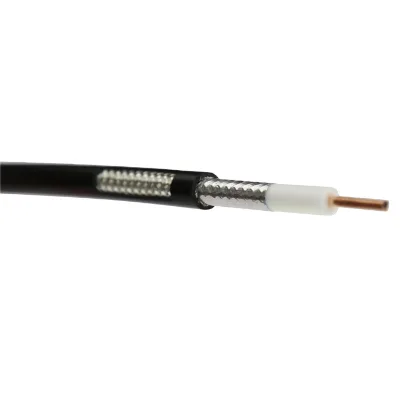
Verifying the conductor type and braiding configuration is critical for ensuring signal integrity in CCTV installations, as these factors directly influence attenuation and electromagnetic interference resistance. Buyers should confirm whether the cable utilizes solid or stranded conductors, with stranded options often preferred for flexibility during installation in tight spaces, while solid cores may offer better performance for permanent, long-distance runs. Additionally, the braiding density, which can vary from 32 to 144 strands, plays a crucial role in shielding effectiveness; higher braiding counts generally provide superior protection against external noise, which is vital for maintaining clear video feeds in electrically noisy environments.
Impedance and connector compatibility are other key technical parameters that must be validated before placing orders. Most CCTV systems rely on specific impedance values, typically 75 ohms, to match the characteristics of cameras and recorders, and mismatches can lead to significant signal reflection and image quality loss. Furthermore, the choice of connectors, such as RCA or XLR, must be compatible with the existing infrastructure, and buyers should ensure that the cable’s physical dimensions, such as a 0.8mm conductor size, fit within the constraints of their mounting hardware and conduit systems to avoid installation difficulties.
Compliance and Safety Documentation
Certification requirements vary significantly across suppliers, with many products listing RoHS and CE compliance as standard, while others may include additional certifications like CCC, UL, ISO, CSA, or VDE. These certifications indicate adherence to specific regional safety and environmental standards, which is particularly important for projects in markets with strict regulatory frameworks. Buyers should request valid certification documents for each batch or product line, as the presence of a certification mark on a listing does not always guarantee that the specific item being shipped meets the current version of that standard, especially for complex assemblies involving multiple materials.
Environmental and material safety standards, such as RoHS and restrictions on PAHs, are increasingly important for sustainable procurement and worker safety during installation. These standards limit the use of hazardous substances in the cable’s insulation and jacketing materials, which are often made from PVC or similar polymers. Procurement teams should verify that the supplier can provide material safety data sheets (MSDs) and test reports confirming compliance, as this not only mitigates legal risks but also ensures that the installed cabling does not pose health hazards in enclosed spaces like server rooms or control centers.
Cost Drivers and Commercial Terms
The price range for coaxial cables in the observed market spans from very low to moderate levels, reflecting differences in material quality, manufacturing processes, and certification levels. Minimum order quantities (MOQs) also vary widely, from as low as 10 units to as high as 30,000, allowing buyers to scale their purchases according to project size. However, extremely low prices may indicate the use of inferior materials, such as copper-clad aluminum instead of pure copper, which can compromise long-term reliability and increase maintenance costs, so buyers should balance initial cost savings against total cost of ownership.
Commercial terms, including packing specifications and origin details, also influence the total landed cost and logistical planning. Products originating from China, particularly from industrial clusters like Changzhou, often benefit from economies of scale, but buyers must account for shipping, customs duties, and potential lead times. Understanding the packing format, whether it is individual cartons, bulk spools, or palletized shipments, is essential for calculating storage requirements and handling efficiency, as improper packing can lead to cable damage during transit, resulting in additional costs and project delays.
Supplier Qualification and Quality Control
Evaluating supplier qualifications requires a thorough review of their manufacturing capabilities and quality management systems, particularly those holding ISO certifications. Suppliers with established production lines in regions like Jiangsu, China, often have the infrastructure to support large-scale orders and consistent quality, but buyers should verify the scope of their ISO certification to ensure it covers the specific products being procured. Additionally, the availability of customization services suggests a flexible manufacturing process, which can be advantageous for projects with unique requirements, but it also necessitates rigorous quality control checks to ensure that custom specifications are met without compromising standard performance metrics.
Quality control processes should include incoming material inspections, in-process testing, and final product verification to ensure consistency across batches. Buyers should inquire about the supplier’s testing protocols for key parameters such as attenuation, impedance, and shielding effectiveness, as these are critical for CCTV performance. Furthermore, establishing a clear communication channel for addressing defects or non-conformities is essential, and buyers should define acceptance criteria and rejection procedures in their contracts to protect against receiving substandard materials that could jeopardize the integrity of the surveillance system.
Long-Term Procurement Checks
Long-term procurement success depends on establishing a robust supplier relationship that prioritizes continuous improvement and adaptability to changing market conditions. Buyers should regularly review supplier performance metrics, including on-time delivery rates, product quality consistency, and responsiveness to technical queries, to identify potential risks early. Maintaining a diversified supplier base can also mitigate supply chain disruptions, ensuring that critical CCTV infrastructure projects remain on schedule even if one supplier faces production or logistical challenges.
Additionally, staying informed about evolving industry standards and technological advancements is crucial for future-proofing procurement strategies. As CCTV systems increasingly integrate with digital networks and high-definition video formats, the demand for cables with superior signal integrity and lower loss characteristics will likely grow. Buyers should engage with suppliers who demonstrate a commitment to innovation and compliance, ensuring that their cable solutions remain compatible with emerging technologies and regulatory requirements, thereby protecting the long-term value and reliability of their surveillance investments.
FAQs
What certifications do the coaxial cables have?
The cables carry RoHS and CE certifications as standard. Some models also include CCC, UL, ISO, CSA, and VDE marks. These certifications ensure compliance with safety and environmental regulations for multimedia and monitoring applications.
Which wire core materials are available for these cables?
Available core materials include red copper wire, bare copper wire, and various conductor types like BC, CCS, CCA, TC, CU, or CCAG. The wire shape can be round or flat depending on the specific product model and application requirements.
Can I request customization for these coaxial cables?
Yes, customization is available for these products. Buyers can specify different connector types like RCA or XLR, and select from various packing options such as cartons, bags, or spools to match their specific distribution needs.
What is the standard packaging for these cables?
Packaging varies by model and includes cartons, PE bags, blister packs, boxes, spools, drums, wheels, or pallets. Some items are packed as 25 pieces per bag, while others are sold in standard lengths like 305 meters per roll.
Where are these coaxial cables manufactured?
These cables are manufactured in China, with specific origins noted in Changzhou, Jiangsu. The products are designed for multimedia, monitor, and local communication applications, ensuring reliable performance for various audio and video systems.
What is the minimum order quantity for these cables?
The minimum order quantity ranges from 10 to 30,000 units depending on the specific product model. Buyers should check the individual listing for exact MOQ requirements to ensure they meet the supplier's purchasing thresholds.
Which connector types are supported for these cables?
Supported connector types include RCA and XLR connectors. These cables are suitable for multimedia, monitor, DVD player, and game player applications, providing versatile connectivity options for various audio and video equipment setups.